

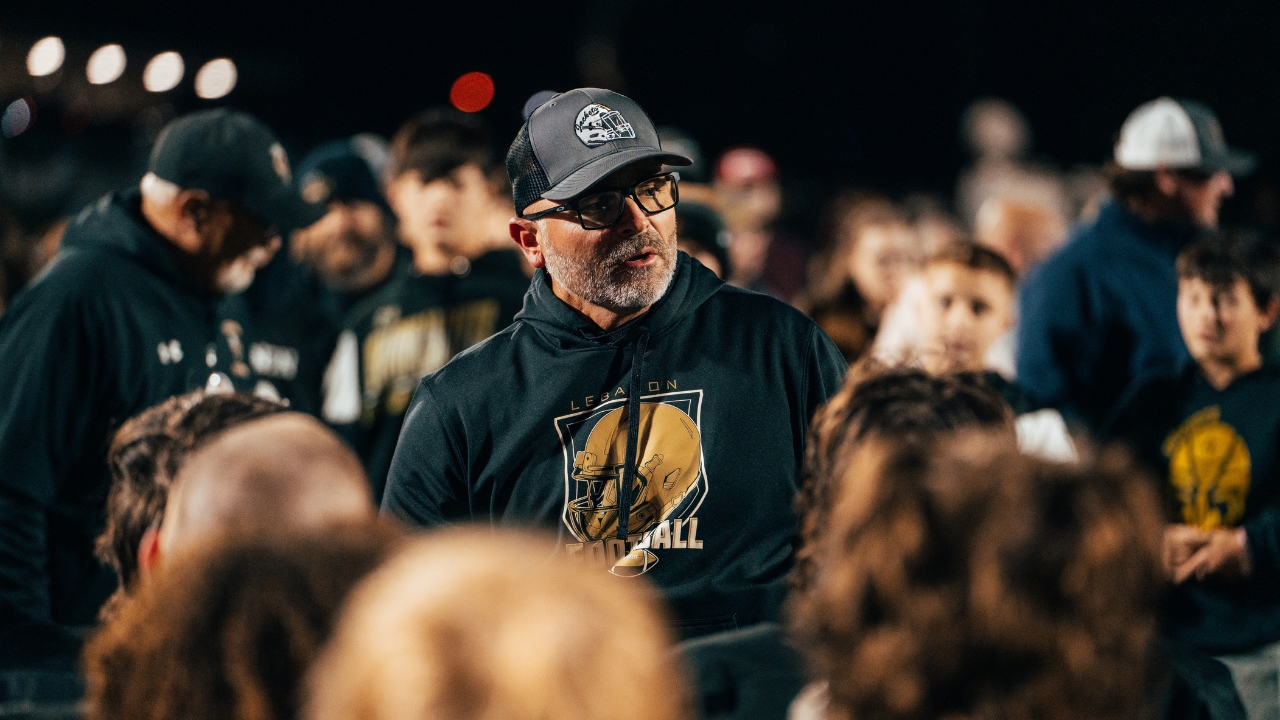
It's difficult to put that kind of tenure into perspective. That's more than two decades of practices, games, relationships, and young men who have come through the Lebanon football program. It's also more than two decades of a coach who helped change the expectations surrounding Yellowjacket football and, in the process, influenced a lot of lives.
There will be plenty written and said about his wins, championships, and what comes next for the program. Those accomplishments deserve recognition.
But I think the bigger story is about the people.
I've had the opportunity to get to know Coach Christian over the last three football seasons through Jacket Nation Sports. I certainly don't know him as well as the coaches who've worked beside him for years or the players who spent their high school careers in his program. But I've had a front-row seat to parts of his leadership that don't always show up on a scoreboard.
And I've developed a tremendous amount of respect for the man.
Building a Different Standard
When Christian arrived in Lebanon in 2005, he wasn't taking over a program that had been consistently competing for championships. He was coming from Marionville, where he'd won a state title, and he had a pretty clear idea of what needed to change.
It started with how the players worked, how they prepared, and what they expected from themselves.
His first team finished 1-9 in 2005. The next two seasons ended 5-5. Those records don't exactly jump off the page, but Christian has always credited the players from those early years for doing some of the most difficult work of his tenure.
They were the ones who had to help establish a new identity before there was much success to show for it.
He also recognized that building a program meant starting well before kids reached high school. Bringing youth football under the Lebanon identity, developing a consistent approach, and creating a connection between the youngest players and the varsity program became an important part of what he established.
By 2008, the Yellowjackets had reached the playoffs, finished with a winning record, and defeated Camdenton after a long drought against their Highway 5 rival.
More importantly, the mindset had changed.
Lebanon football was no longer simply hoping to compete. The expectation was that the Yellowjackets could compete with anybody.
Over the years, that belief helped produce conference and district championships, postseason success, and opportunities for players to continue their careers at the college level.
But Christian's expectations were never limited to what happened on the field.
Integrity. Courage. Effort.
Those three words became a foundation of the program, and they're something I've heard him talk about repeatedly.
He expected his players to be accountable, to handle adversity, and to understand the value of putting in the work. Those are lessons that don't end when a young man plays his final football game.
And after more than two decades, there are a lot of former Yellowjackets carrying those lessons into the rest of their lives.
The Man Behind the Program
Coach Christian takes his responsibilities seriously, and that comes through in the way he communicates. He's professional, deliberate, and understands that his words carry weight.
But over the last three seasons, I've also gotten to know a more relaxed, personable, and genuinely funny side of Coach C. I still remember him stopping by our office one day, wearing a Kelce brothers T-shirt, just to visit and shoot the breeze. It's a small memory, but one I appreciate.
One of the things we've always tried to do with Jacket Nation Sports is get beyond the X's and O's and give people an opportunity to know the person behind the program.
In August 2024, I sat down with Christian for a longer conversation about his family, his career, and what had shaped his approach to coaching. It was an opportunity to hear from him in a way that went beyond the usual football questions, and I came away with a much better understanding of the man.
He talked about his own high school coach, Rich Davies, who had become a father figure in his life, and how that relationship influenced the coach he wanted to become.
Christian wanted to create that same kind of environment for other young people. He believed in building relationships, understanding what kids were going through, and helping them grow beyond football.
He called it transformational coaching.
That conversation helped me understand why he holds his players and coaches to such high expectations. He can be demanding, and he doesn't shy away from difficult conversations, but he believes those relationships are supposed to mean something beyond winning games.
It's a philosophy I've come to appreciate more and more as we've worked alongside him.
A Legacy That Continues Through Other Coaches
One of the parts of Christian's career that I think deserves more attention is his influence on the coaches who've worked alongside him.
Building a successful program for more than two decades requires good people, and Christian has never been shy about recognizing the importance of his staff.
Coaches like Mark Whitacre, Zach Tucker, Mike Palmer, Coach Amsberg, and many others helped establish and maintain the standard that Lebanon football became known for. Some were there during the difficult early years. Others joined later and helped carry the program forward.
Christian has consistently emphasized the importance of those relationships and the ownership his assistants have taken in the program.
But he's also invested in preparing them for opportunities beyond Lebanon.
Coach John Franks spent 11 years as Lebanon's defensive coordinator before becoming the head coach at Rolla. Other assistants have continued their careers in different roles and programs.
And I've had an opportunity to see how Christian prepares his coaches for those responsibilities.
There's a longstanding tradition within Lebanon football that after a victory, an assistant coach joins Kevin Stubblefield for the postgame interview. After a loss, Christian handles the questions himself.
Kevin tells me that practice was established well before Jacket Nation Sports began covering the Yellowjackets.
Christian wants his assistants to gain experience representing the program, speaking publicly, and handling responsibilities that come with leadership. When there's an opportunity for someone else to receive recognition, he gives it to them. When the questions are difficult, he's willing to answer them himself.
I've always respected that.
Because the influence of a coach doesn't stop with the players he personally works with. It continues through the people he helps prepare to lead.
Some of the coaches who learned and developed under Christian will spend decades working with young people in other communities. They'll establish their own standards, build their own relationships, and hopefully pass along some of the same lessons.
That's a legacy that reaches a lot further than Lebanon football.
A Champion for Kids
As much as Christian has accomplished in football, I think his work as Lebanon's activities director says just as much about who he is.
If you've followed Lebanon athletics for any length of time, you've probably seen him at events that have nothing to do with football.
He can be coaching on a Friday night and then turn around and be at a cross country meet the next morning. Another day, it might be volleyball, golf, or something else happening around the district.
I've always been impressed by that commitment.
And I think it would be easy for somebody in his position to get so consumed with football that everything else became secondary.
But Christian has always seemed to understand that the kids involved in those other activities deserve somebody in their corner, too.
He once explained to me that after spending so many years in Lebanon, this had become his community. He genuinely cared about the students and programs he was responsible for supporting, and he wanted those kids to know it.
His reasoning was simple. How were they supposed to know he cared if he didn't show up?
I've never forgotten that.
Because when you think about what a high school activities director can mean to a student, sometimes it's as simple as being present. It's taking an interest in what they're doing, recognizing the work they've put in, and making sure they understand that their accomplishments matter.
Not every kid is going to play varsity football. Not every student is going to win a championship or earn a college scholarship.
But every one of them deserves an opportunity to participate in something meaningful and to know that the adults around them care about their success.
Christian has spent years supporting those opportunities.
And even as news of his departure began to circulate, that same commitment was evident. His concern wasn't about himself or the attention surrounding the news. It was about the young men in his program and making sure they were taken care of.
I think that says a lot about Coach C. Even when the conversation is about him, his first thought is about somebody else.
And I think that's a huge part of the impact he's had on Lebanon.
In 2026, Christian received the Pete Adkins Power of Influence Award from the Missouri Football Coaches Association. It's an honor that recognizes the influence coaches have beyond the game itself.
When you consider his work with players, his commitment to developing coaches, and the support he's provided to students across the district, it seems particularly fitting.
He Gave Us a Chance
My appreciation for Coach Christian goes beyond what I've watched him do for other people.
Bryon and I wouldn't be where we are today with Jacket Nation Sports without the opportunity he gave us.
Before this thing really got started, we sat down with him about an idea. We wanted to provide more coverage of Lebanon athletics, tell more stories about the kids, and give families another way to share in what their sons and daughters were accomplishing.
We didn't have much of a track record. We had some equipment, an idea, and a pretty strong belief that we could create something worthwhile.
Christian listened, gave us access to his program, and let us get to work.
During that August 2024 interview, he admitted something that still makes me laugh a little.
He was skeptical.
And I don't blame him. Looking back, I probably would have been, too.
But he gave us a chance anyway.
He told us that what we'd done had exceeded his expectations and that he appreciated what it meant for the community, the kids, and the coaches.
That meant a lot coming from him.
Three football seasons later, Jacket Nation Sports has grown into something Bryon and I are incredibly proud of. We've had the opportunity to tell stories, cover programs throughout Lebanon, and create opportunities for students interested in doing this kind of work themselves.
A lot of people have helped us get here, and I don't want to take anything away from them.
But Christian was one of the first people who opened a door for us.
And that opportunity has had an impact far beyond football.
I don't know that I've ever properly thanked him for that.
The Impact of Coach C
As Lebanon football prepares for its next chapter, there will naturally be questions about who takes over, what changes, and what the future of the program looks like. That's part of any coaching transition, especially one involving someone who has led a program for more than two decades.
But I hope there's also time to recognize what Christian and the people around him have established here. He inherited a program that needed a new direction and helped create one with an identity, expectations, and a connection to the community that begins long before a player reaches high school.
I think about the young men who came through his program, including those who were part of the difficult early years and helped establish the foundation for everything that followed. I think about the coaches who have worked alongside him, learned from him, and will carry some of those lessons into their own careers. And I think about the students across Lebanon who have benefited from having an activities director who genuinely cared about their programs and wanted them to succeed.
None of that means every season was successful or that every decision was the right one. Christian has always been willing to acknowledge that he has things to learn and areas where he can improve. In fact, that willingness to evaluate, adapt, and keep working is part of what helped him build the program in the first place.
Personally, I'll remember the opportunities he gave us, the conversations we've had, and the things I've learned from watching how he handles the responsibilities of his position. I know Bryon and I have benefited from his willingness to give Jacket Nation Sports a chance, and I hope the work we've done has reflected the trust he placed in us.
I also hope that as the years go by, former players and coaches continue sharing their own experiences with Coach C. Those stories will probably tell us more about his impact than any statistic ever could. Some will be about football, but I'd imagine many will be about the conversations, lessons, and relationships that mattered long after the games were over.
Coach Christian, thank you for what you've given Lebanon, for the standards you've helped establish, and for the countless hours you've invested in young people. And Bryon and I want to thank you for opening a door for us when Jacket Nation Sports was still just an idea.
The football program will move forward, as it should. But the influence of a coach who spent more than two decades investing in players, developing other coaches, and supporting kids throughout the district doesn't simply disappear when he steps away from the sideline.
That's the impact of Coach C.